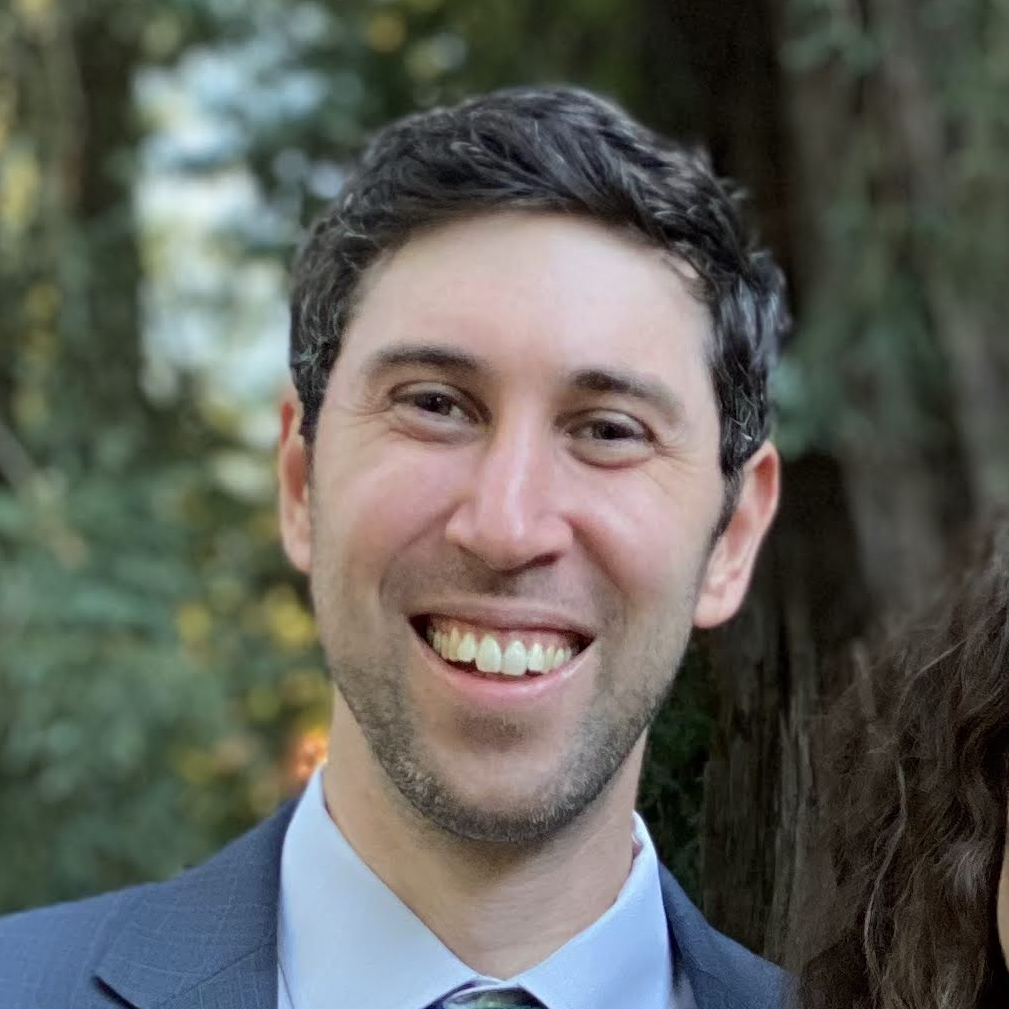
William Aisenberg
Postdoctoral Scientist @ Bennett Lab
Microglia x ECM remodeling
How do microglia remodel the brain?
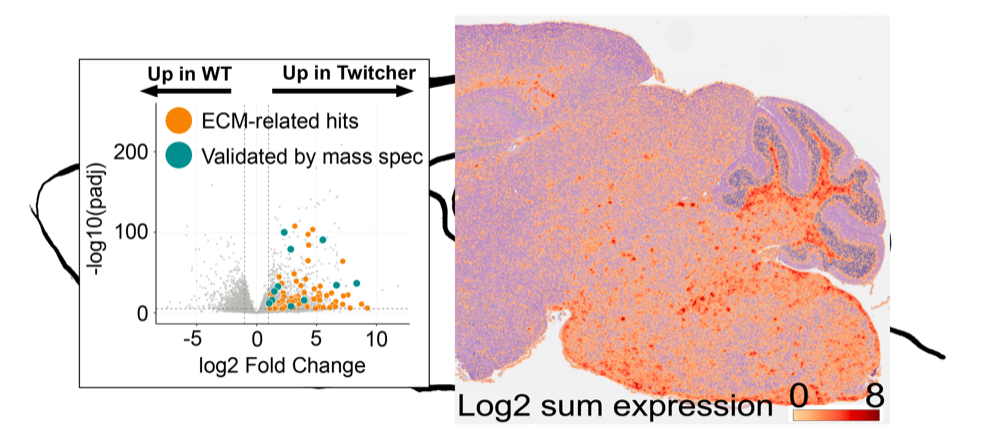
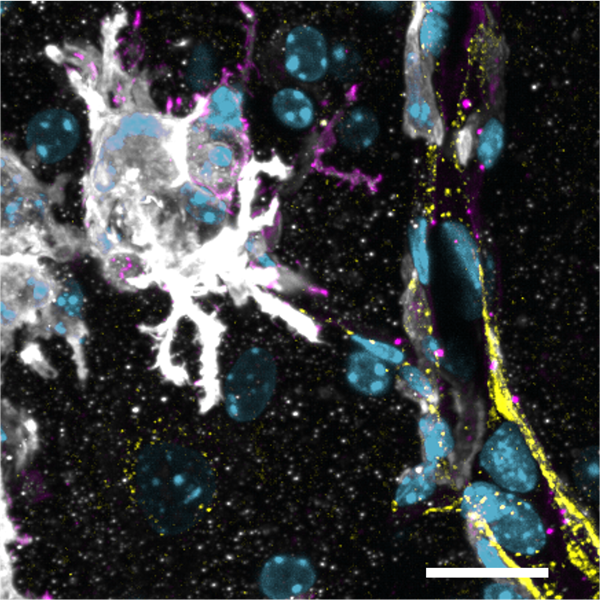
Microglia continuously refine the brain's extracellular matrix through proteolytic degradation and phagocytosis. My research asks how those roles change in disease, and how they influence the matrix structure, proteome, and mechanics.
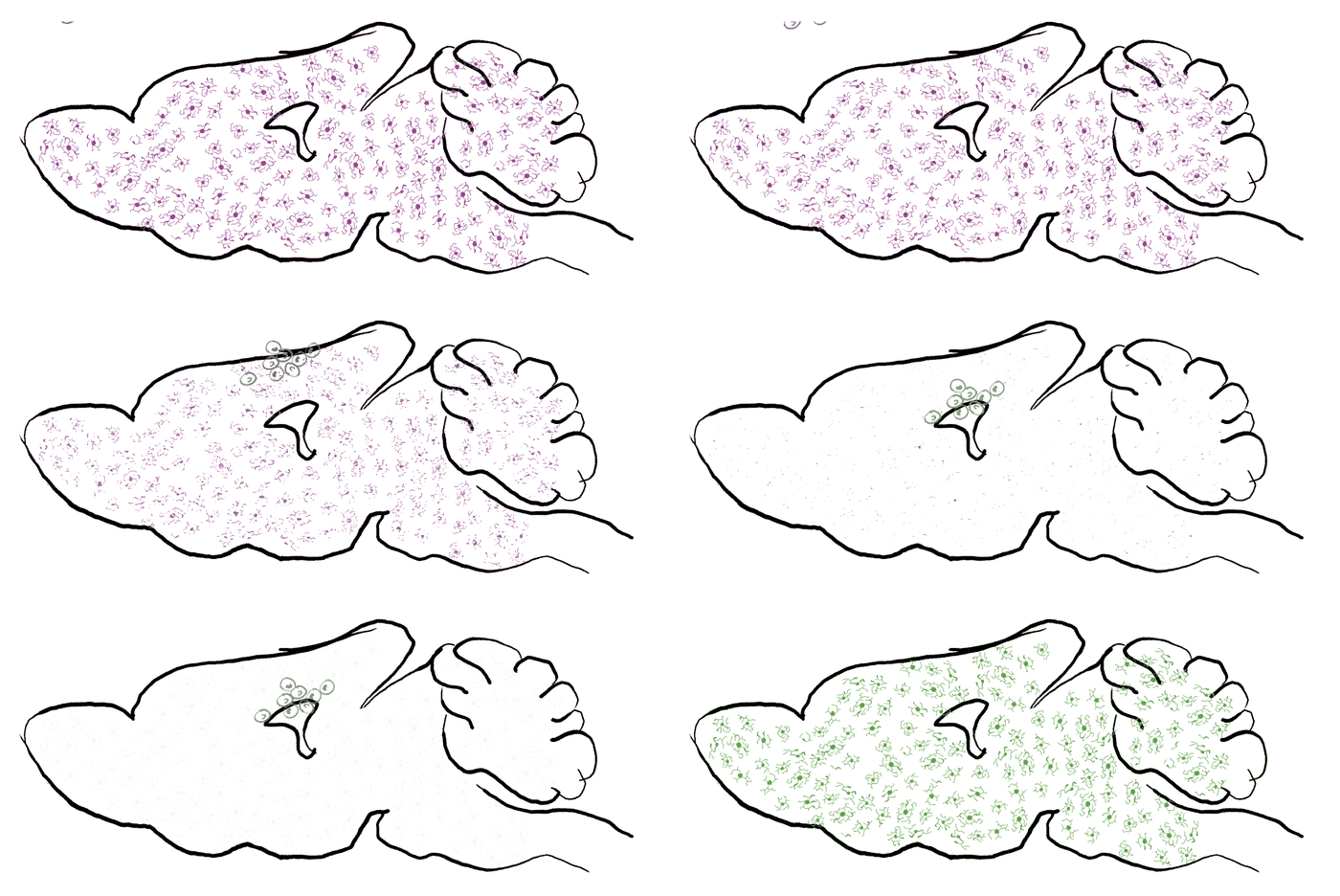

CRISPR-edited cells replace host microglia
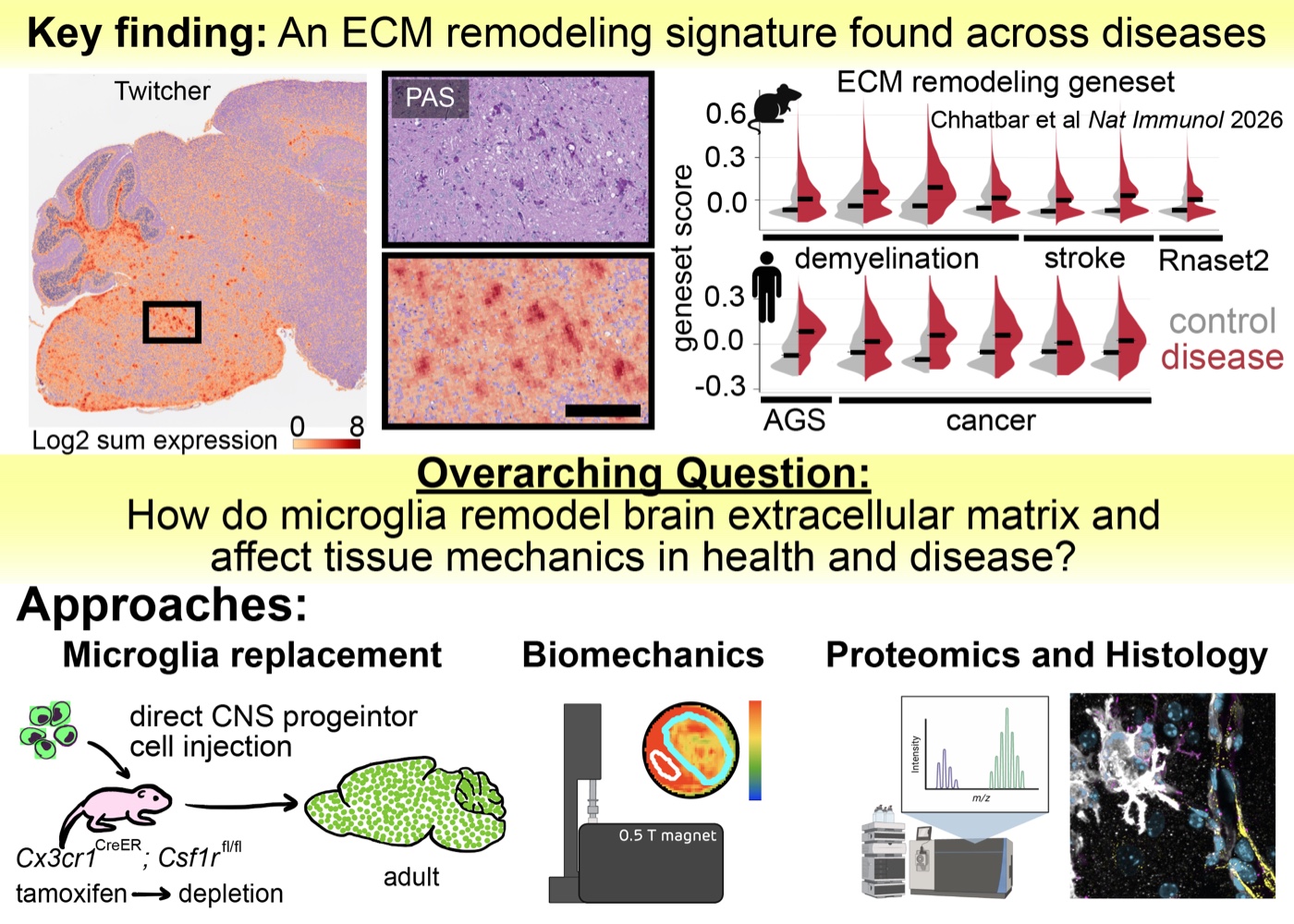
I identify matrix remodeling genes upregulated in disease and combine macrophage engineering, microglia replacement, biomechanics, and histology to define their impact on pathology and repair.
Research Vision
The extracellular matrix and mechanical properties of the brain change in disease. Microglia replacement provides a tractable framework to define how macrophages remodel the brain’s extracellular environment and contribute to these changes. Longer term, I will expand this framework to investigate how reciprocal interactions among glia, neurons, and the extracellular matrix shape brain physiology and pathophysiology. This work will establish new principles of neural cell regulation of the brain microenvironment and identify therapeutic opportunities across demyelinating disease, neurodegeneration, brain cancer, and aging.
Research Program
Research Aims
My research program sits at the intersection of macrophage engineering, extracellular matrix (ECM) biology, and tissue mechanics. Building from discoveries made during my postdoctoral research, I seek to understand how macrophages sense and remodel the brain's extracellular environment, identify the molecular mechanisms that control these processes, and harness them to engineer macrophages that can therapeutically reshape pathological tissue.
Understand
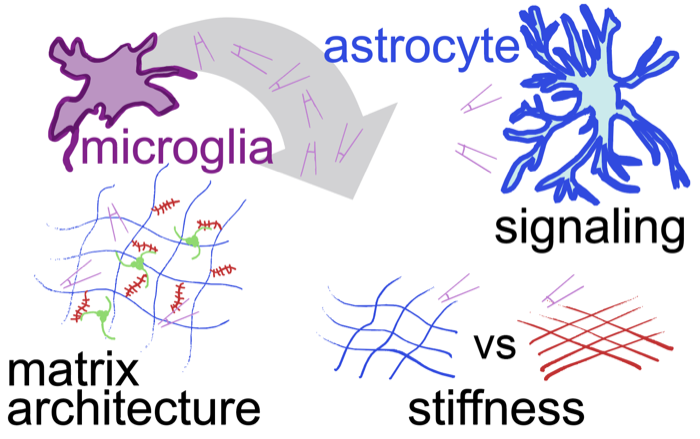
How does microglial fibronectin remodel the brain?
Discover
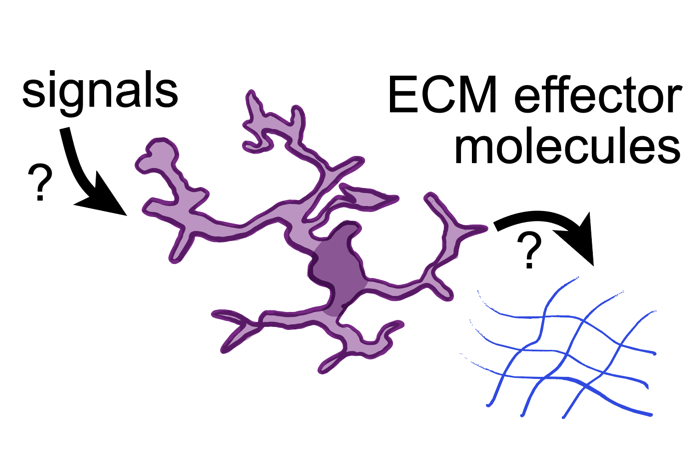
What signals microglia to remodel ECM, and how do they do it?
Engineer
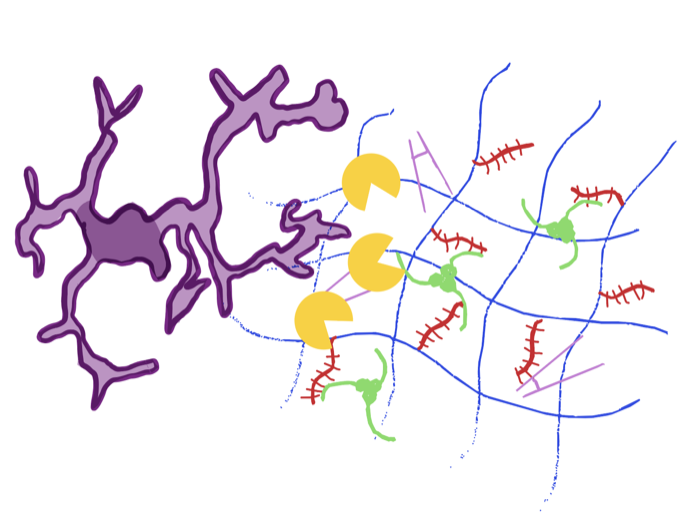
Harness macrophage ECM remodeling therapeutically.
Honors & Funding
Funding & Fellowships
- NIH K99/R00 Pathway to Independence Award
- Alavi-Dabiri Postdoctoral Fellowship
- NIH F31 NRSA Predoctoral Fellowship
Selected Awards
- Keystone Symposia Scholarship
- Postdoc Poster Prize
- Richard P. Bunge Award
Selected Invited Talks
- Glia in Health and Disease
- Penn IRM Mini-Symposium on Fibrosis, Cell Matrix, and Regeneration
- Georgetown University Neuroscience Seminar Series
Teaching & Mentorship
- Guest Lecturer, University of Pennsylvania
- Mentor to graduate students & research staff
- Graduate Recitation Instructor, Johns Hopkins
Selected Publications
My full list of publications can be found on Pubmed or Google Scholar
Commentaries: Trends in Immunology · Alzforum
Identified disease-associated macrophage states and demonstrated their roles in pathology using microglial replacement. Among these states was an ECM remodeling signature including an over 300-fold increase in expression of fibronectin. Microglia replacement reduced gliosis, axon pathology, toxic lipid accumulation and doubled survival in the Twitcher model of Krabe disease.
Impact: Establishes a platform to explore basic macropahge biological functions, and target them therapeutically in any model of neurological disease.
Microglia replacement by peripheral delivery of CSF1R inhibitor-resistant hematopoietic cells
Developed an approach for microglial replacement via peripheral delivery of engineered hematopoietic cells. Enables scalable and flexible manipulation of brain macrophage populations in vivo.
Impact: Provides a foundation for manipulating macrophage progenitors to probe their roles in disease.
Applied microglial replacement to model interferon-driven neuroinflammation, defining how macrophages contribute to pathology.
Impact: Demonstrates the versatility of replacement strategies across disease contexts.
Molecular and metabolic heterogeneity of astrocytes and microglia (review)
Synthesizes emerging principles of glial heterogeneity, highlighting how molecular and metabolic diversity shapes function in health and disease.
Impact: Frames key concepts guiding current studies of glial cell states.
Engineering an inhibitor resistant human CSF1R variant for microglia replacement
Engineered a CSF1R variant enabling selective survival of defined macrophage populations during depletion.
Impact: Provides a critical tool for new microglial replacement approaches.
CV and other Documents
Get in Touch
Open to conversations about faculty positions, collaborations, and science.